Eastspring Investments
Designing a Provident Fund Management Ecosystem for Multiple Stakeholders
Year
2023
Role
UX/UI Design
Client
Eastspring Investments A Prudential plc company
/ Background
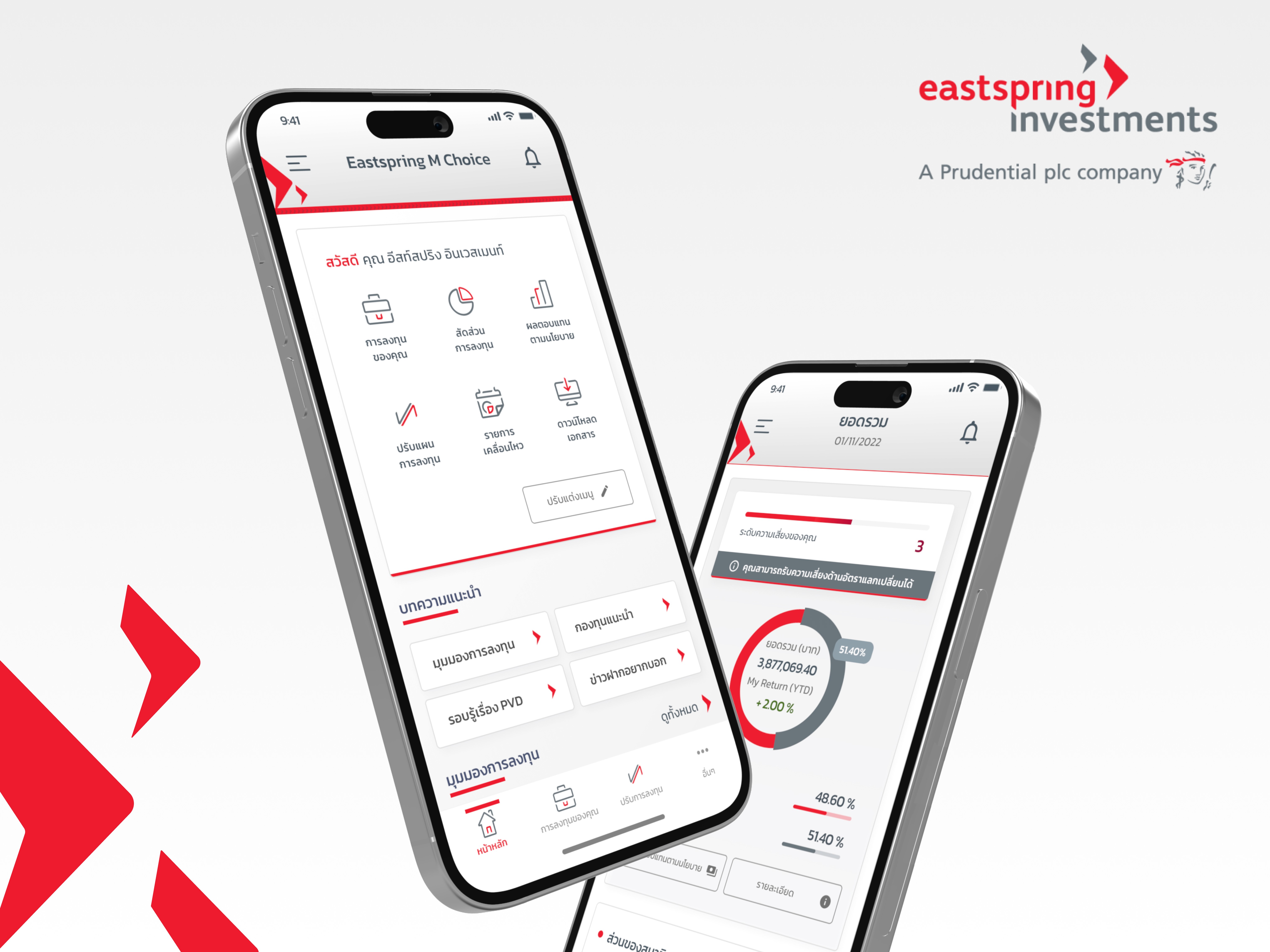
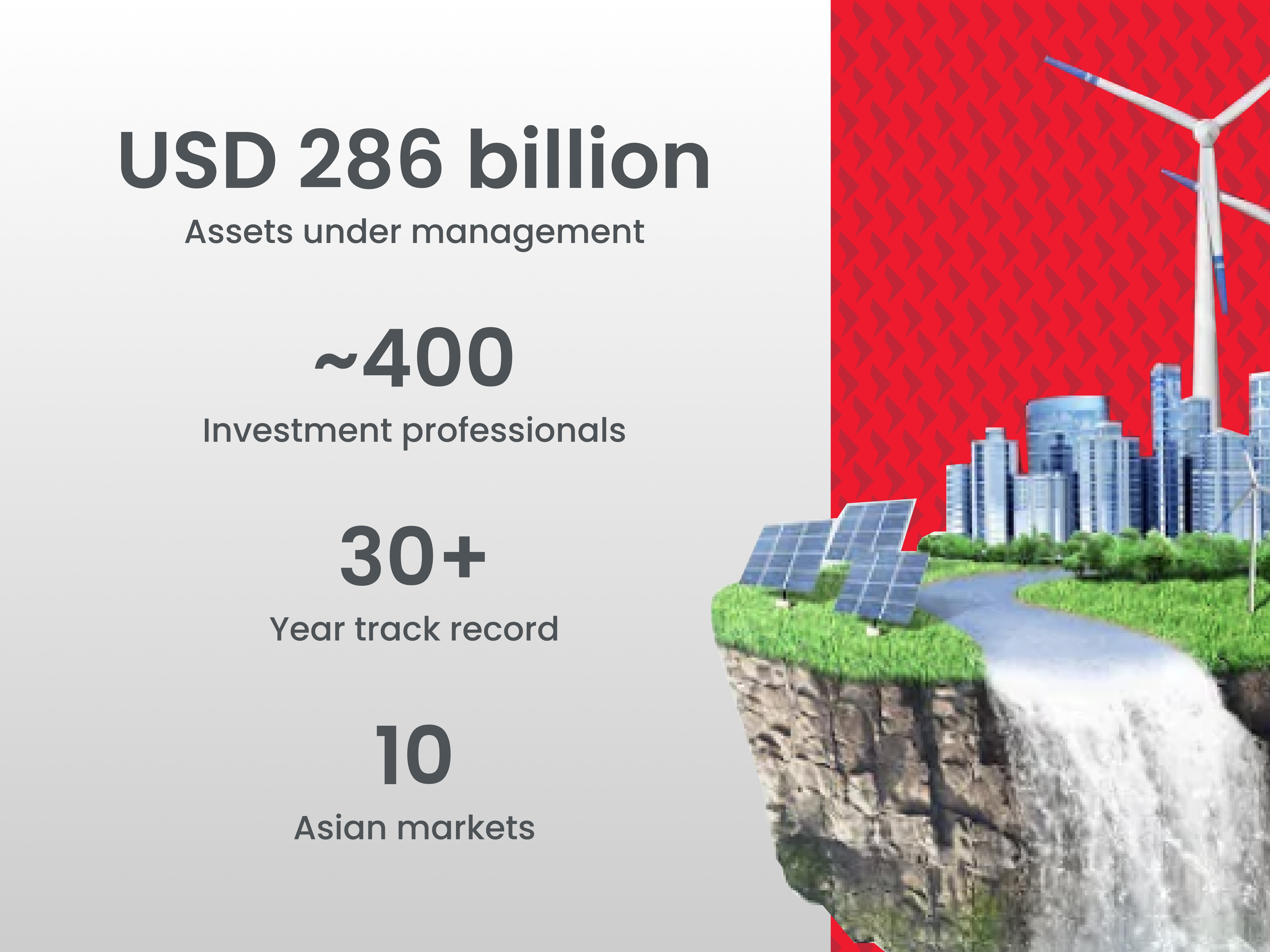
Eastspring Investments is a global asset manager delivering investment solutions across Asia through the collaboration of TMBAM Eastspring, Thanachart Fund Eastspring, and Eastspring Investments (Singapore).
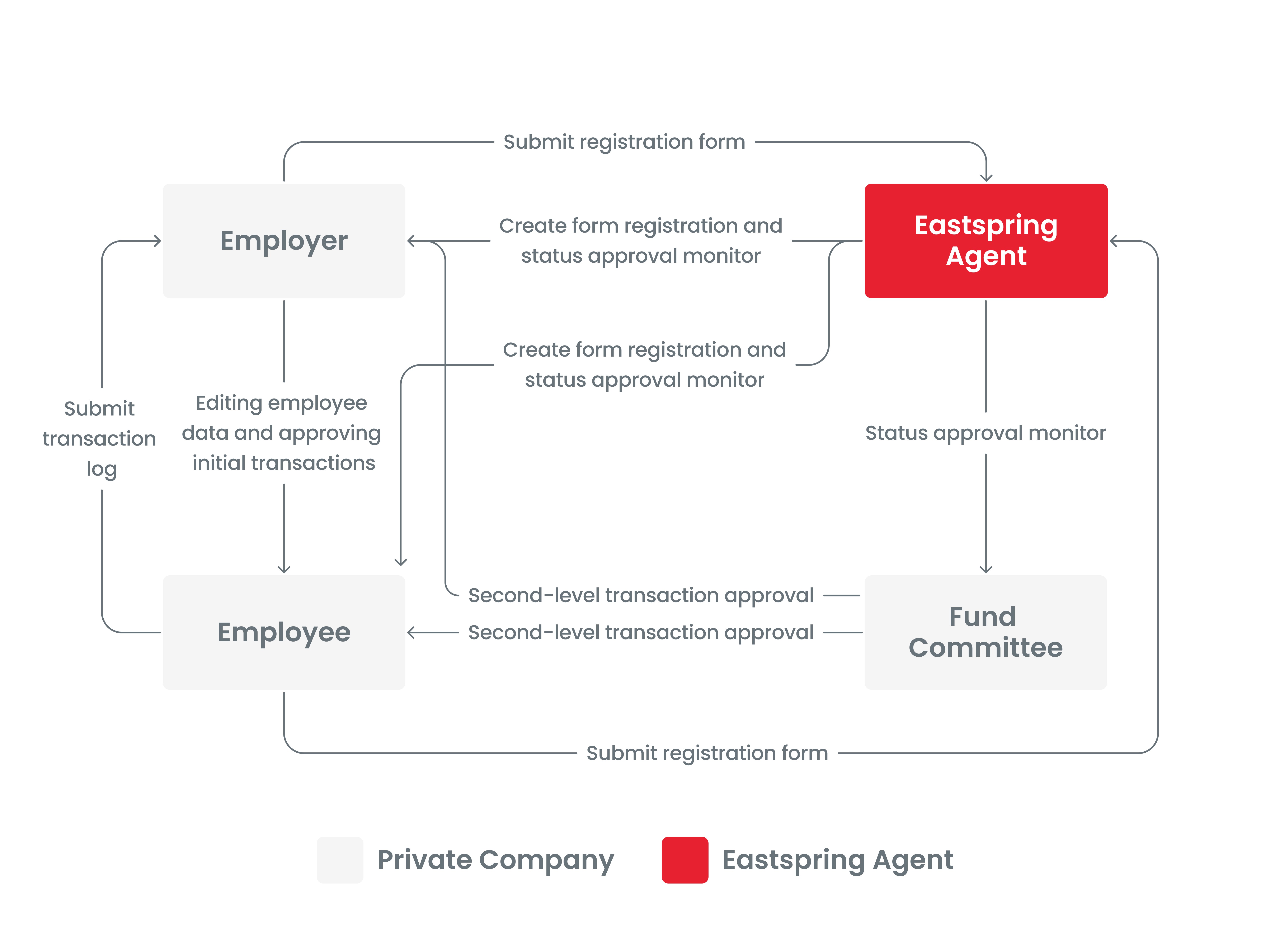
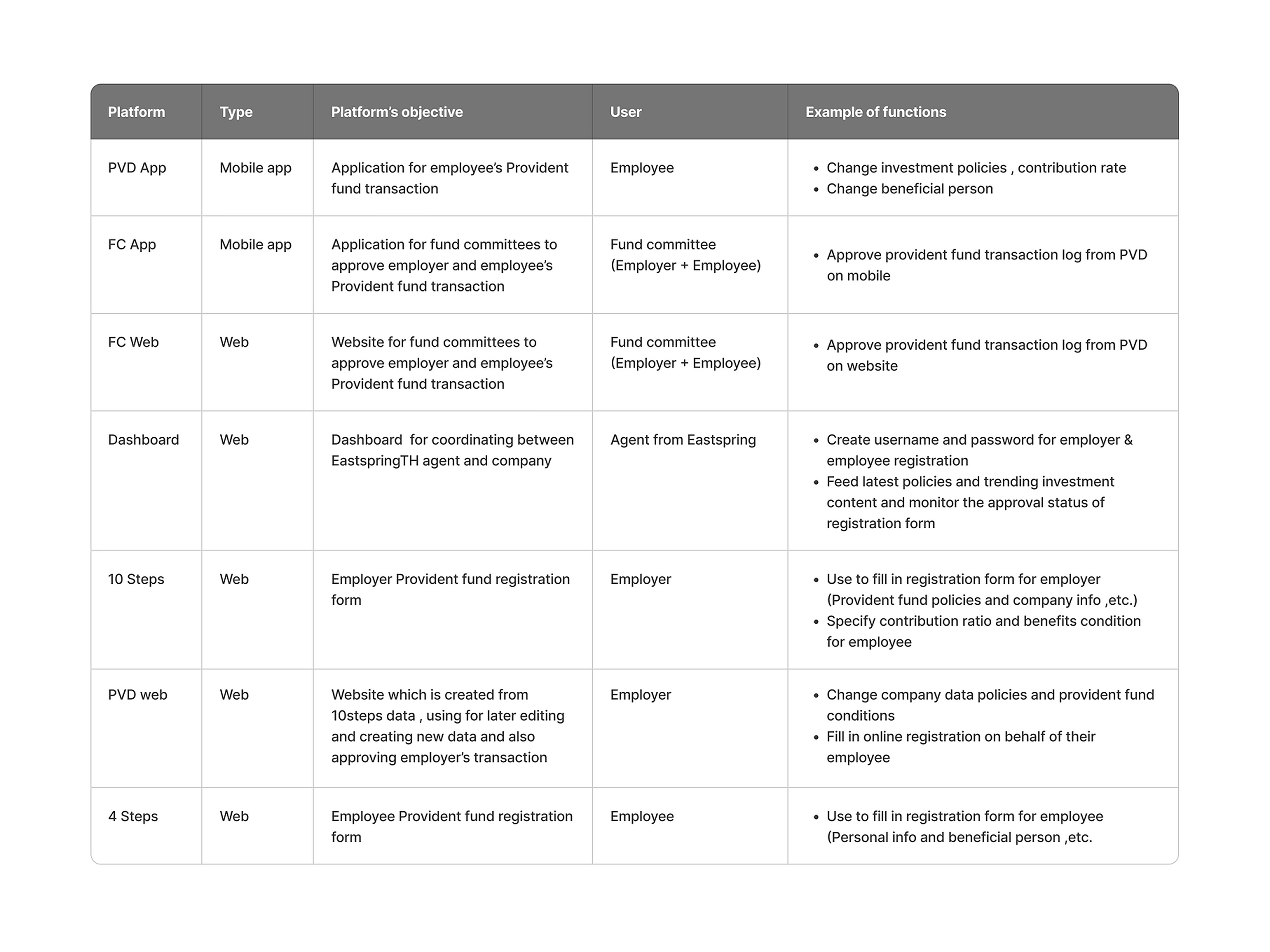
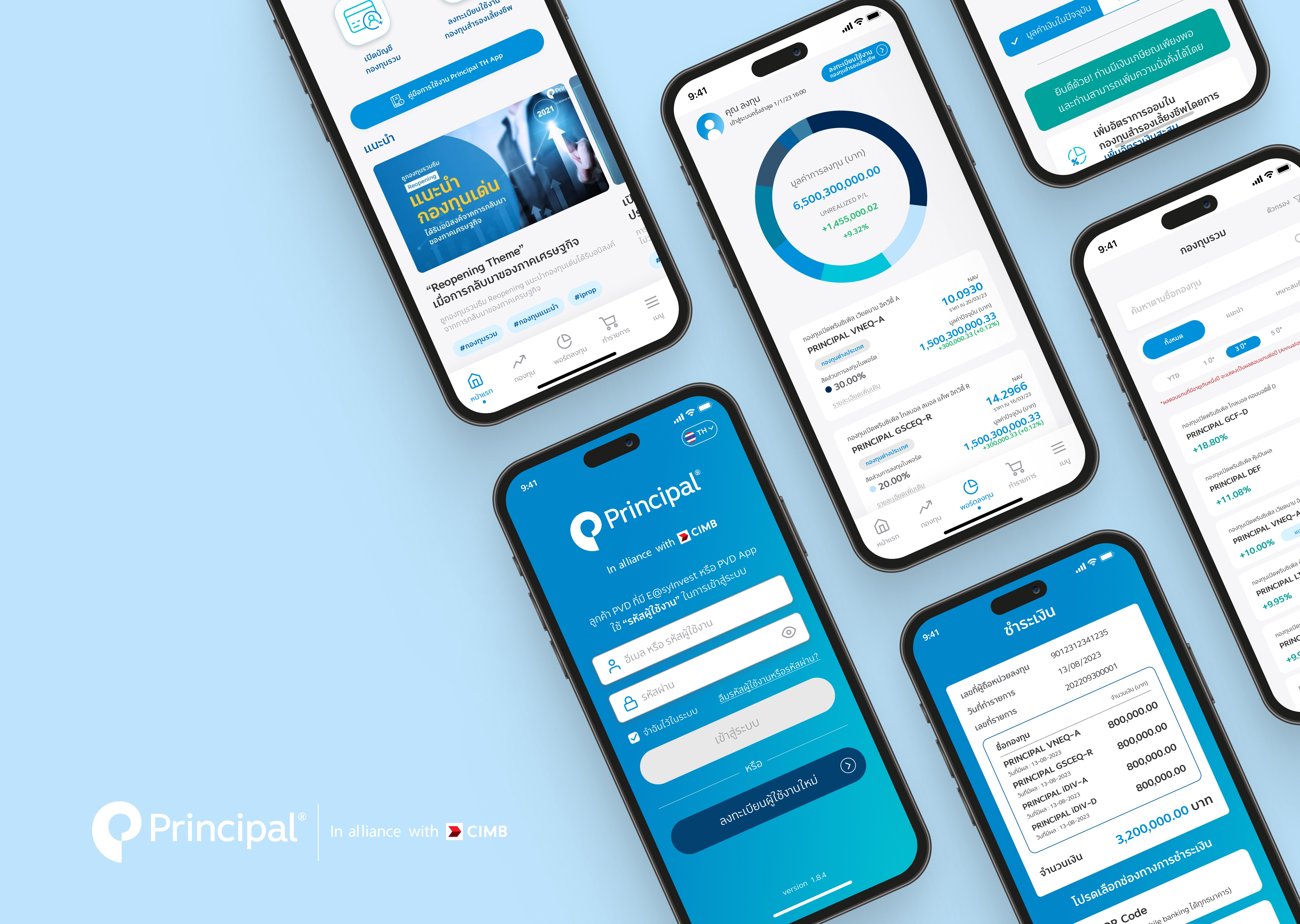
This project focused on the first development phase of a Provident Fund (PVD) management ecosystem that supports long-term fund operations across multiple stakeholders, including employees, employers, fund committees and Eastspring agents.
/ Design Process
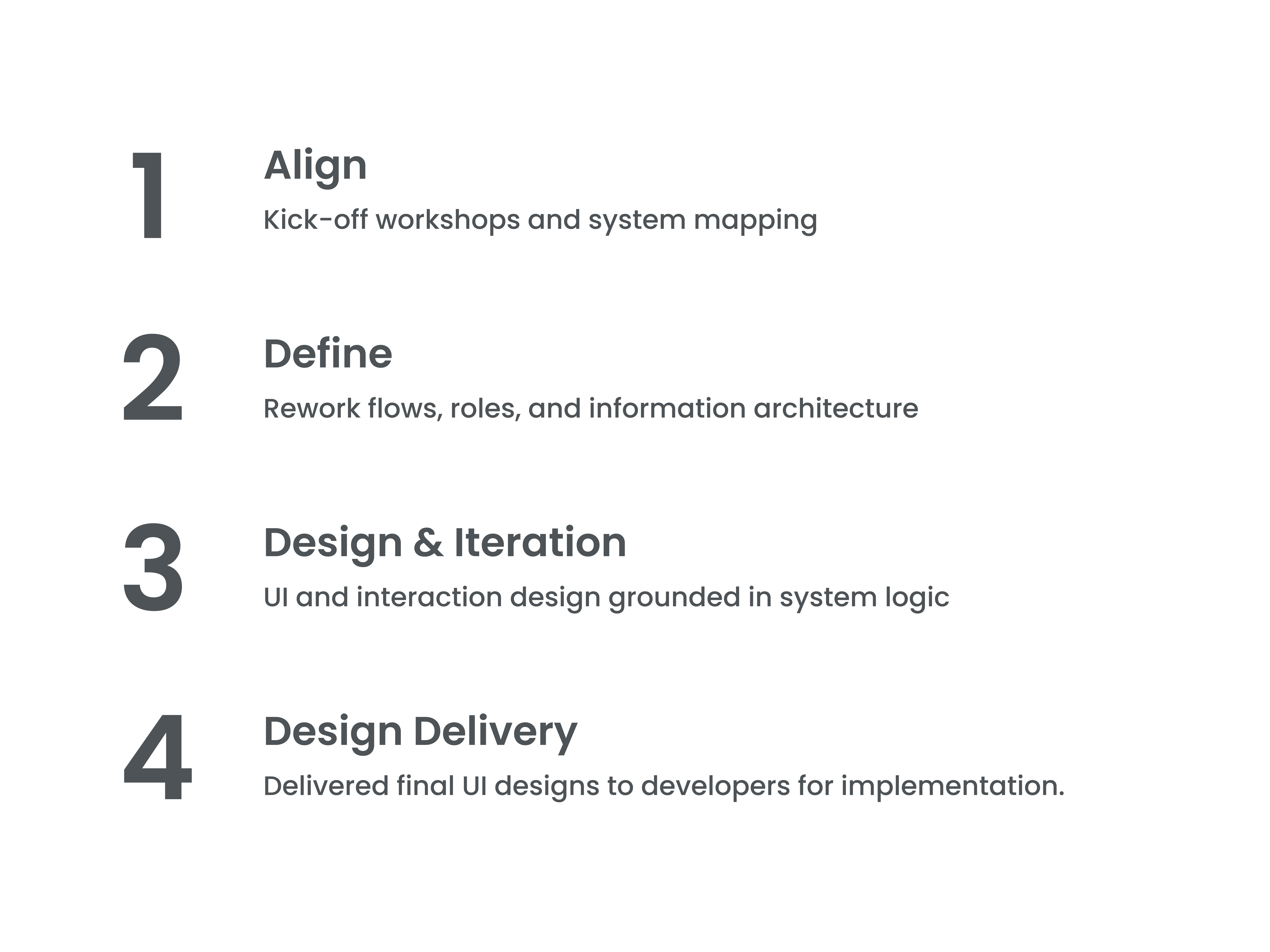
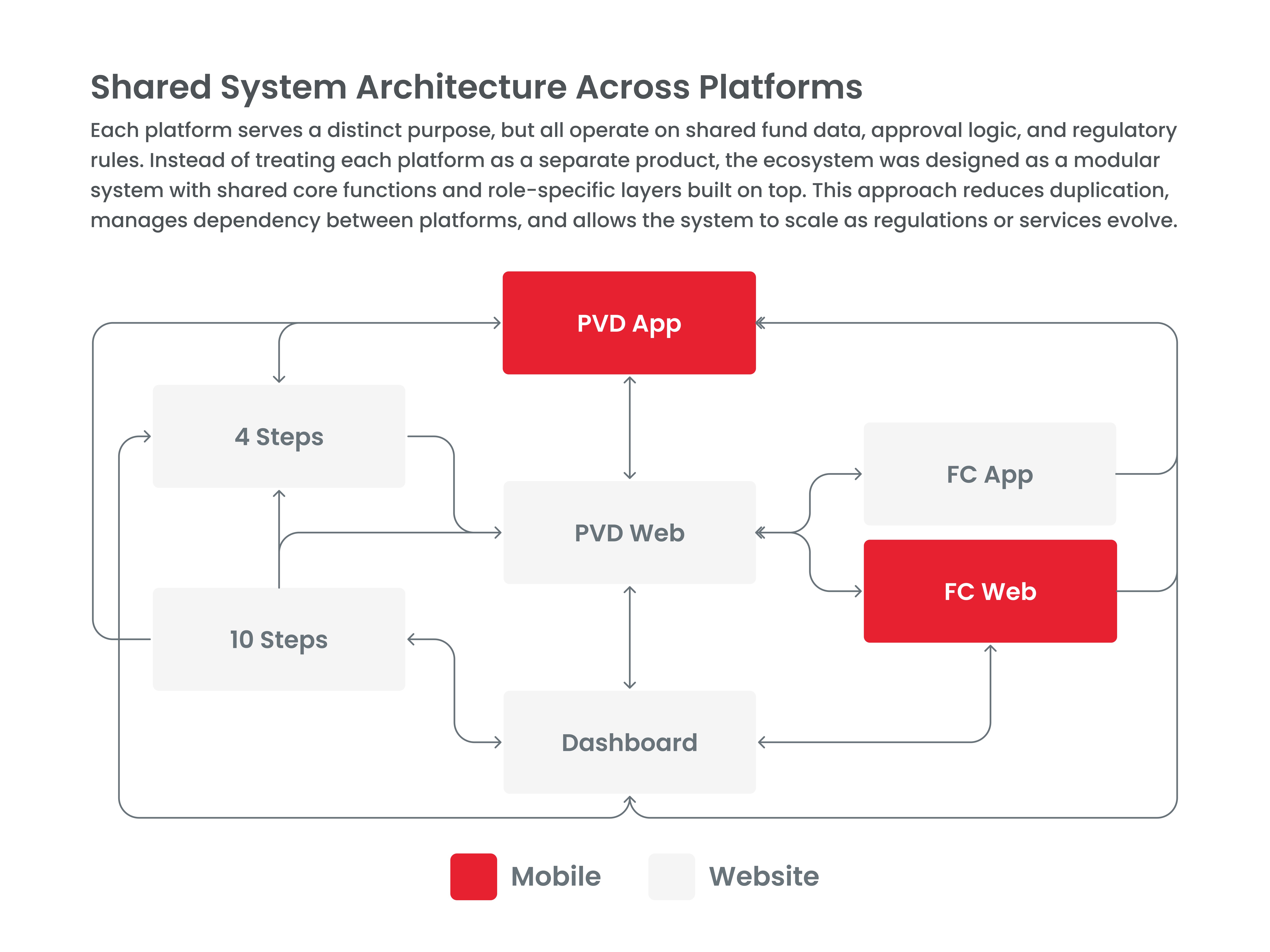
The challenge was that this was not a single product but a distributed ecosystem in which the same provident fund data flowed across multiple platforms. Different roles interacted with the same transactions in different ways, and changes in one platform such as approval logic or menu structure could affect others.
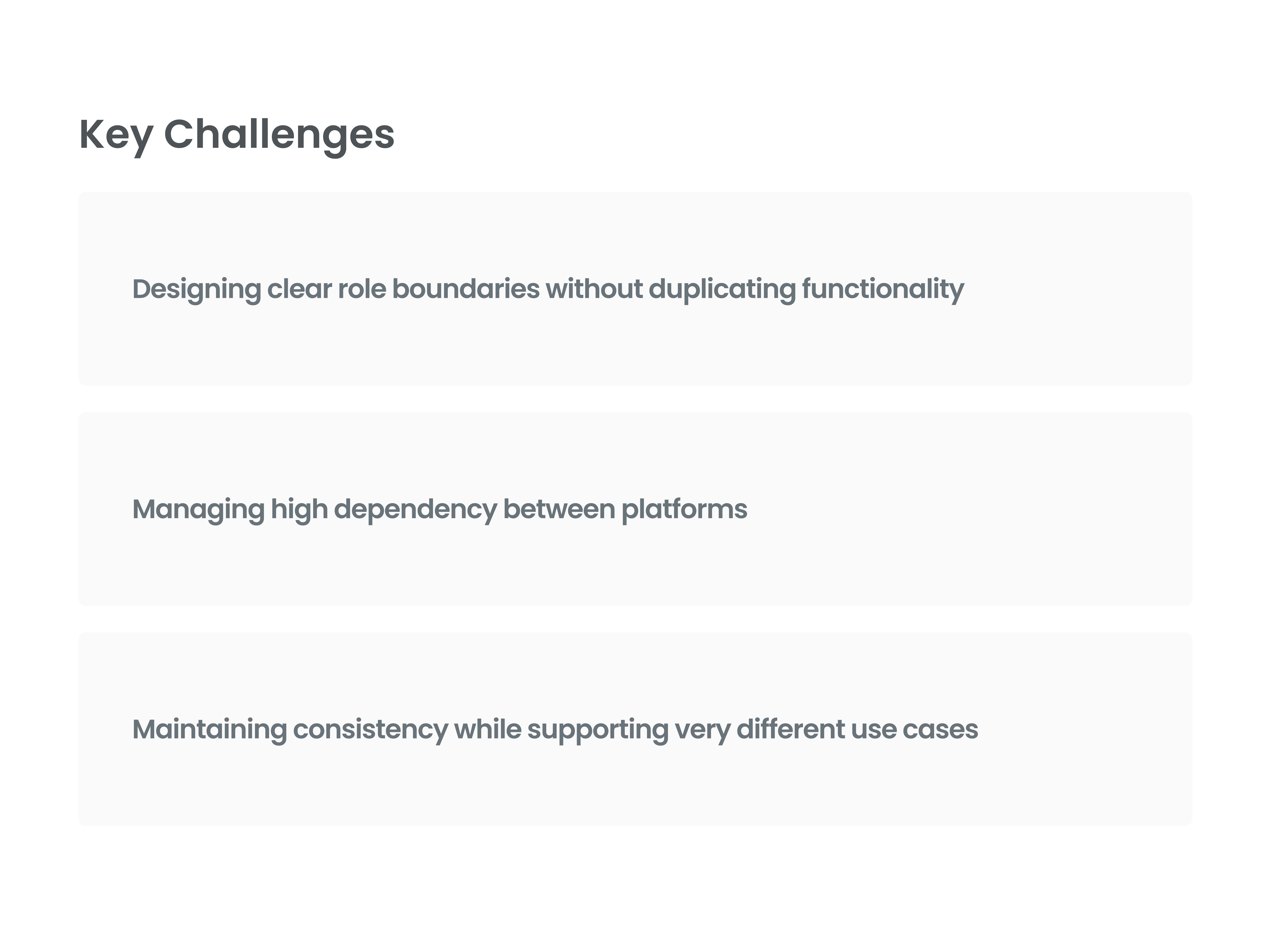
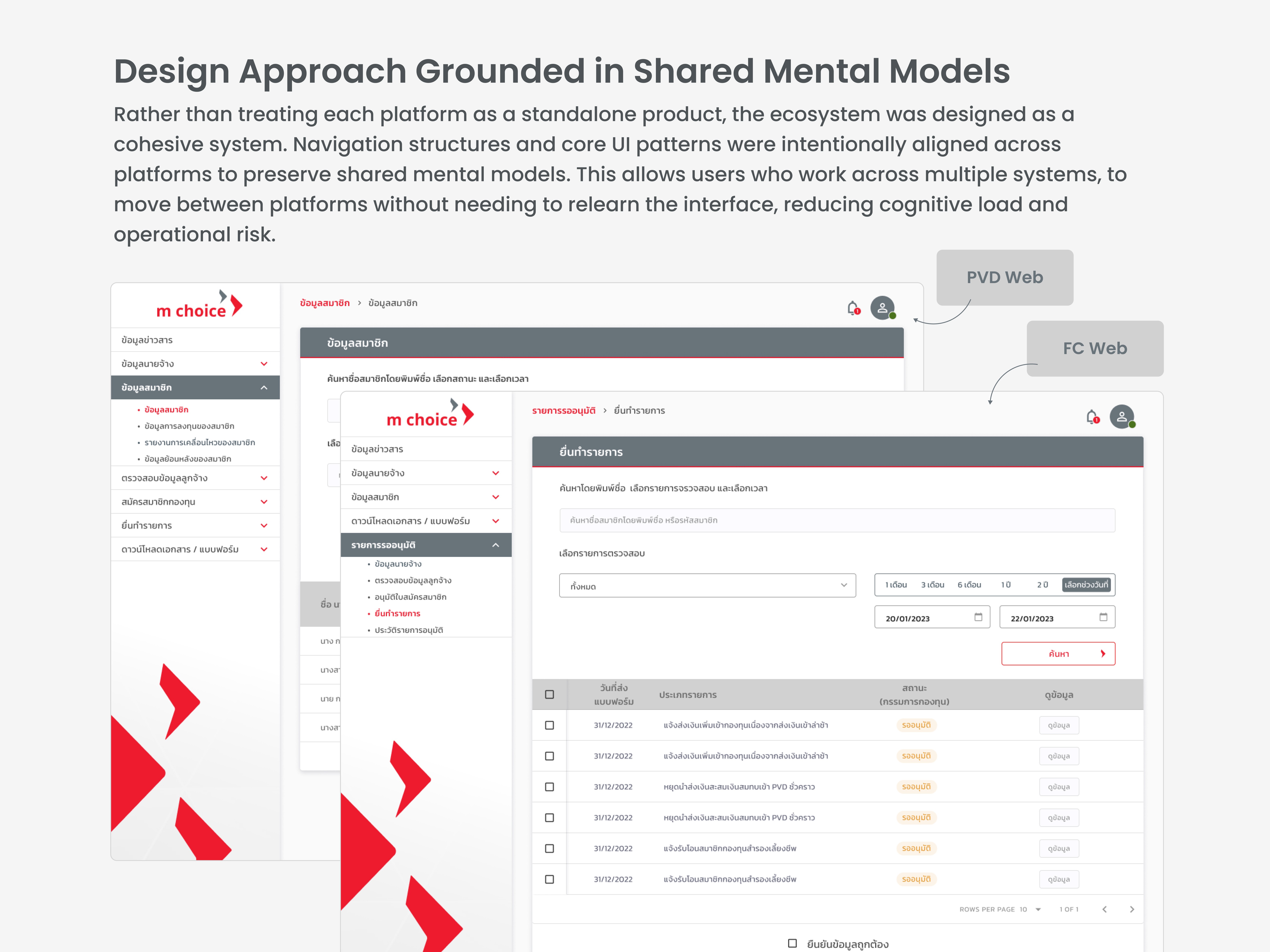
The key challenges were defining clear role boundaries without duplicating functionality, managing high dependency between platforms, and maintaining consistency while supporting very different use cases. The main risk was fragmentation. Designing each platform independently would increase operational errors, maintenance costs, and regulatory risk, which made a systemic approach essential to addressing the challenge.

Eastspring Investments
Designing a Provident Fund Management Ecosystem for Multiple Stakeholders
Year
2023
Role
UX/UI Design
Client
Eastspring Investments A Prudential plc company
/ Background
Eastspring Investments is a global asset manager delivering investment solutions across Asia through the collaboration of TMBAM Eastspring, Thanachart Fund Eastspring, and Eastspring Investments (Singapore).
This project focused on the first development phase of a Provident Fund (PVD) management ecosystem that supports long-term fund operations across multiple stakeholders, including employees, employers, fund committees and Eastspring agents.
/ Design Process
The challenge was that this was not a single product but a distributed ecosystem in which the same provident fund data flowed across multiple platforms. Different roles interacted with the same transactions in different ways, and changes in one platform such as approval logic or menu structure could affect others.
The key challenges were defining clear role boundaries without duplicating functionality, managing high dependency between platforms, and maintaining consistency while supporting very different use cases. The main risk was fragmentation. Designing each platform independently would increase operational errors, maintenance costs, and regulatory risk, which made a systemic approach essential to addressing the challenge.
Eastspring Investments
Designing a Provident Fund Management Ecosystem for Multiple Stakeholders
Year
2023
Role
UX/UI Design
Client
Eastspring Investments A Prudential plc company
/ Background
Eastspring Investments is a global asset manager delivering investment solutions across Asia through the collaboration of TMBAM Eastspring, Thanachart Fund Eastspring, and Eastspring Investments (Singapore).
This project focused on the first development phase of a Provident Fund (PVD) management ecosystem that supports long-term fund operations across multiple stakeholders, including employees, employers, fund committees and Eastspring agents.
/ Design Process
The challenge was that this was not a single product but a distributed ecosystem in which the same provident fund data flowed across multiple platforms. Different roles interacted with the same transactions in different ways, and changes in one platform such as approval logic or menu structure could affect others.
The key challenges were defining clear role boundaries without duplicating functionality, managing high dependency between platforms, and maintaining consistency while supporting very different use cases. The main risk was fragmentation. Designing each platform independently would increase operational errors, maintenance costs, and regulatory risk, which made a systemic approach essential to addressing the challenge.